
Archives
-
Online First
Articles listed here have been peer reviewed and accepted for publication in the Harvard Medical Student Review, but have not yet been copyedited, typeset, or assigned to a numbered issue. Each one is citable immediately by its DOI. When the final version of record is published in a future issue, it will replace the accepted manuscript at the same DOI and the same URL.
-
Harvard Medical Student Review: Issue 11 – 2026
Vol. 11 No. 1 (2026)Issue 11 of the Harvard Medical Student Review explores the role of attention, stewardship, and evidence in shaping medical care. Opening with reflective artwork and a narrative on observation in global health, the issue considers how trainees witness suffering, scarcity, and resilience while learning to practice with humility. Perspective pieces examine medical respite for unhoused patients, cultural dimensions of medical futility, and emergency care in resource-limited settings. Reviews and original analyses address diabetes prevalence and ICU/hospital length of stay, sex differences in stroke presentation and prehospital education, neurologic effects of implant-derived metal ions, and levonorgestrel-based emergency contraception. Together, these works highlight the breadth of trainee scholarship and invite readers to consider how medicine can better integrate careful observation, ethical reflection, systems improvement, and patient-centered care.
-
Special Issue: A Wishlist for the Future of Medicine
2025This year, science, medicine, and academia faced an unprecedented reckoning. In light of this, we called on Harvard medical students to help illuminate the wayforward, asking:
If we could wish for an ideal future of medicine, what would we ask for?
This collection is our answer.
-
Harvard Medical Student Review: Issue 10 – November 2025
Vol. 10 No. 1 (2025)Issue 10 of the Harvard Medical Student Review explores how emerging technologies, evolving care models, and longstanding inequities are reshaping modern medicine. From critical examinations of AI’s limitations and the medicalization of aging to analyses of private equity in ophthalmology and sex differences in acute MI presentation, contributors interrogate the tension between innovation, ethics, and equity. Original research and reviews address topics such as social determinants of health screening in the emergency department and stem cell–based therapies for type 1 diabetes, while perspective pieces highlight tumor resistance in the human lens and gaps in our understanding of cancer biology. Complemented by poetry and curated artwork, this issue showcases the multidisciplinary voices of trainees and early-career scholars committed to a more reflective, just, and patient-centered practice of medicine.
-
Harvard Medical Student Review: Issue 9 – July 2024
Vol. 9 No. 1 (2024)Issue 9 of the Harvard Medical Student Review showcases student- and trainee-led scholarship at the intersection of basic science, clinical practice, and health equity. Original research examines oral health among unhoused populations, evaluates a decade-long peer-led Medical Spanish program, and analyzes mechanisms linking sarcomeric mutations and neuro-immune crosstalk to cardiovascular disease. Perspectives highlight weight bias in clinical training and propose tools to improve post-discharge disposition planning, while a major review traces the history, recent advances, and ethical challenges of solid organ xenotransplantation. Framed by original artwork, this issue illuminates how emerging science and reflective practice can reshape patient care and medical education.
-
Harvard Medical Student Review: Issue 8 – December 2023
Vol. 8 No. 1 (2023)Issue 8 of the Harvard Medical School Review highlights trainee-led scholarship on how evolving science, ethics, and education intersect in modern medicine. Perspectives examine the definition of death in donation after circulatory death policies, student-driven anti-racism efforts, and the potential therapeutic repurposing of the HPV vaccine for skin cancer. Reviews explore dendritic cell vaccines and estrogen signaling in ovarian cancer, as well as innovations in dermatology education and teledermatology prompted by the COVID-19 pandemic. Framed by original poetry and artwork, this issue showcases how medical students and residents are reimagining clinical practice, health equity, and specialty training for the years ahead.
-
Harvard Medical Student Review: Issue 7 – August 2022
Vol. 7 No. 1 (2022)Issue 7 of the Harvard Medical Student Review brings together diverse student-led perspectives and research on urgent challenges in contemporary medicine and health policy. Viewpoint pieces examine resident maternity leave and the need for equitable, family-friendly training environments; propose trauma‑informed approaches to medical education that better support students’ mental health; highlight innovations such as vibration-based microphones to preserve communication for patients on non‑invasive ventilation; and explore how financial structures and targeted scholarships might reinvigorate interest in primary care careers. Review and policy articles address pandemic-disrupted colorectal cancer screening and argue for wider use of FIT testing, analyze South Korea’s plastic surgery boom and its ethical implications, and detail how restrictive abortion laws like the Texas heartbeat bill disproportionately harm low-income women and women of color. Original research on global oncology education in family practice training and a student‑run smoking cessation program for uninsured patients underscores the central role of learners in driving innovation, advocacy, and equity in health care.
-
Harvard Medical Student Review: Issue 6 – March 2022
Vol. 6 No. 1 (2022)Issue 6 of the Harvard Medical Student Review showcases a diverse collection of student scholarship examining pressing challenges in modern medicine. Articles in this issue explore pervasive homophobia in medical education, the physician’s role in addressing gun violence, and the misuse of race in clinical decision-making, alongside critical analyses of mental health referrals in physician aid-in-dying laws and the historical roots of modern therapeutics in folk remedies. Additional contributions address the risks of polygenic risk scores for exacerbating racial health disparities, strategies to reduce childhood respiratory infections from indoor air pollution, and original research on high-fidelity simulation and standardized patient families in preclinical medical education. Together, these pieces highlight the voices of emerging physician-leaders committed to equity, ethics, and innovation in healthcare.
-
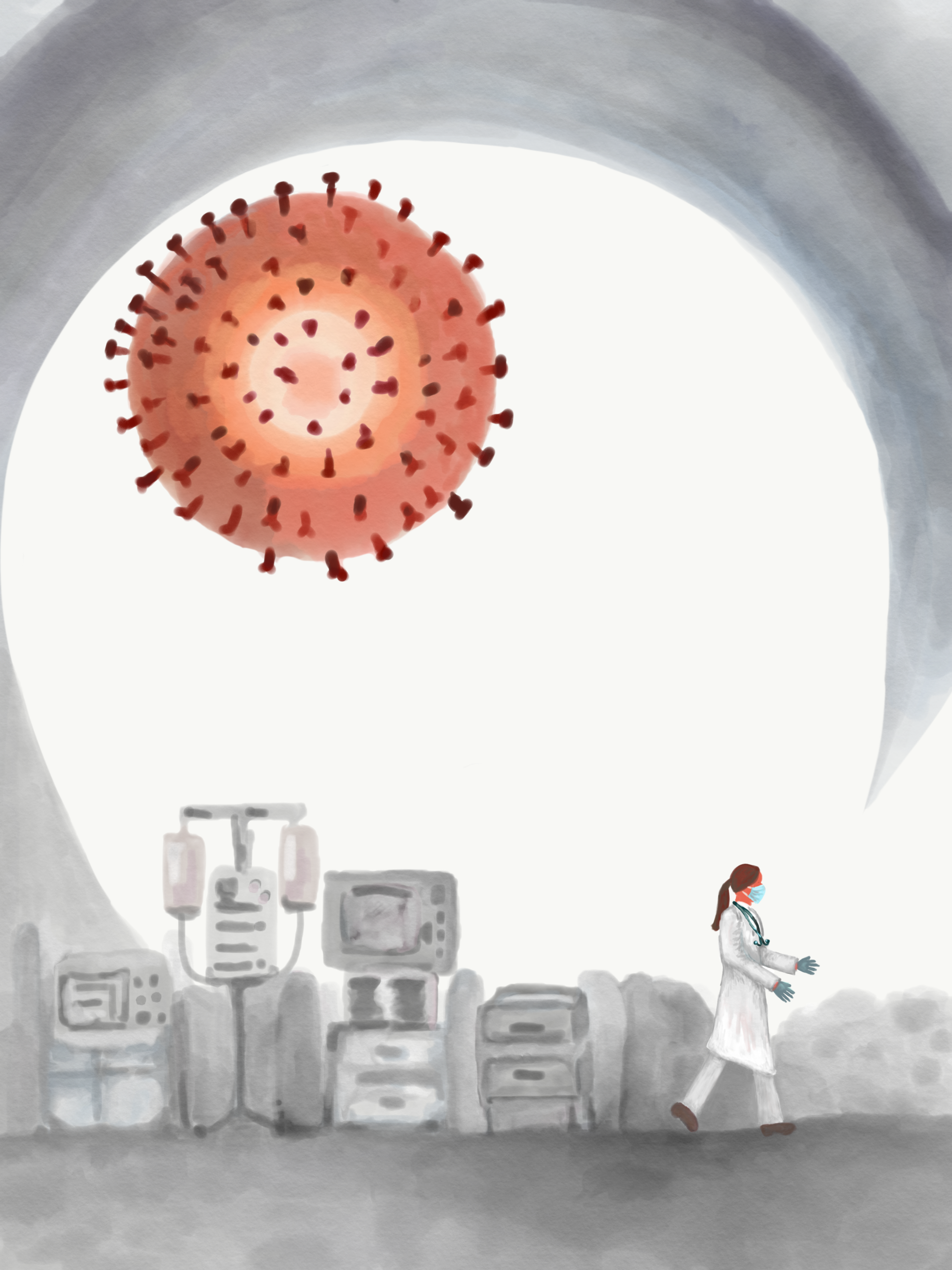
Special Issue: Student Voices of COVID-19
2020With health care systems around the world reeling under the weight of COVID-19, students have been caught in the crossfire at various stages in their training. On one end, some have been sent home by their schools to continue learning online; on the other, some are graduating early and joining the healthcare workforce at the frontlines.
Our goal with Student Voices of COVID-19 is to collect reflections, experiences, and commentary from graduate students in the healthcare field during this extraordinary time.
-
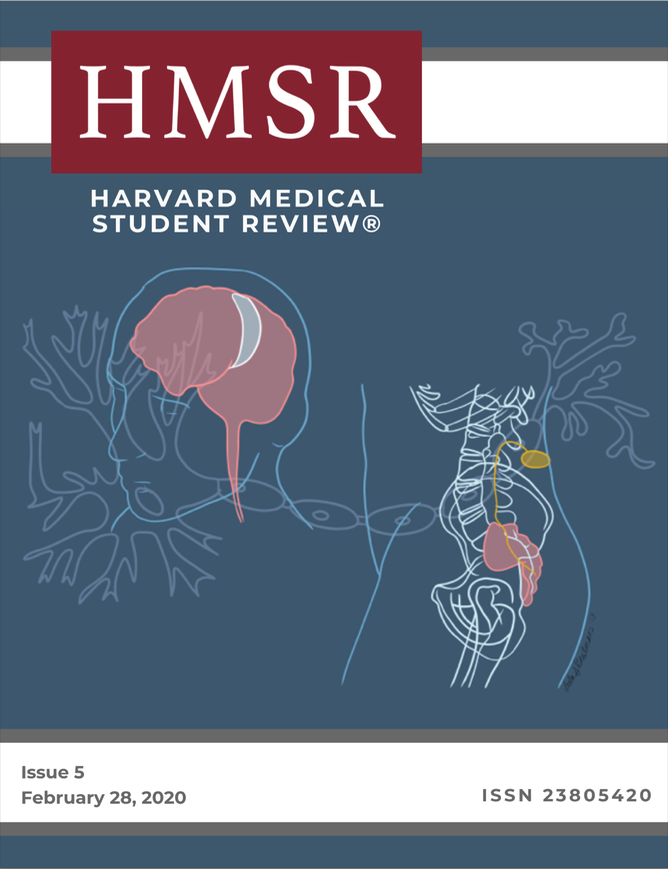
Harvard Medical Student Review: Issue 5 – February 2020
Vol. 5 No. 1 (2020)Issue 5 of the Harvard Medical Student Review features student-driven scholarship on how evolving science, technology, and policy are reshaping medicine. Viewpoint essays critically examine the culture of peer‑reviewed publishing and make the case for evidence-based gun control in Massachusetts. Review articles explore the ethics and justice implications of mHealth and self‑tracking technologies, dissect the neural mechanisms of sacral neuromodulation for functional GI disorders, and trace the development of stem cell–based cures for sickle cell anemia. A surgical case report describes an unusually large benign granular cell tumor with skin and deep-tissue involvement, while original research investigates medical students’ biases toward chronic pain patients, highlighting how trainee perceptions may affect future care.
-
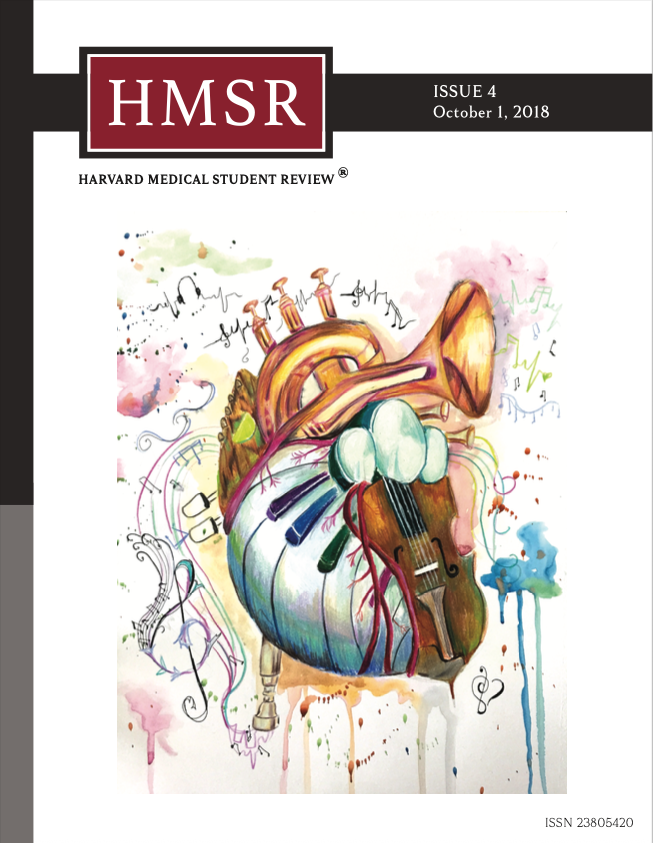
Harvard Medical Student Review: Issue 4 – October 2018
Vol. 4 No. 1 (2018)Issue 4 of the Harvard Medical Student Review marks the journal’s relaunch with a wide-ranging collection of student scholarship at the intersection of clinical medicine, science, and health policy. Viewpoint essays examine South Asian cardiovascular disparities despite apparent “overrepresentation” in medicine, the harms that punitive U.S. immigration and deportation policies inflict on Latinx citizen-children’s health, and the global crisis of inadequate opioid access for palliative care in low‑income countries. Scientific reviews explore emerging mechanisms of sepsis and targeted immunomodulation, the cardiovascular toll of firefighting and circadian disruption, and the role of mitochondrial dysfunction and immune signaling in Parkinson’s disease. Original research evaluates a low-cost “universal” transtibial prosthetic in rural Vietnam using 2D gait analysis, demonstrating its functional promise as an affordable alternative. The issue concludes with an in-depth interview with Dr. Michael Rosenblatt on bridging academia, industry, and data sharing to accelerate therapeutic innovation, underscoring the central role of rigorous science and cross-sector collaboration in improving health.
-
Harvard Medical Student Review: Issue 3 – September 2015
Vol. 3 No. 1 (2015)Issue 3 of the Harvard Medical Student Review showcases student- and trainee-led scholarship spanning health policy, clinical practice, medical history, and ethics. A featured health policy article makes a business case for “oral physicians,” arguing that dentists are well positioned to help address the U.S. primary care shortage through systematic screening and novel practice models. Clinical and historical reviews compare warfarin with newer factor Xa inhibitors for stroke prevention in atrial fibrillation and trace the centuries‑long discovery of viral hepatitis viruses from “campaign jaundice” to modern vaccines and antivirals. Viewpoint essays reflect on teaching obesity medicine abroad as a Fulbright scholar, scrutinize rising U.S. drug costs and the use of cost‑effectiveness in approval and coverage decisions, and propose a “harm principle” to safeguard donors in organ transplantation. Together, these pieces highlight how evolving science, economics, and ethics are reshaping the practice and policy of modern medicine.
-
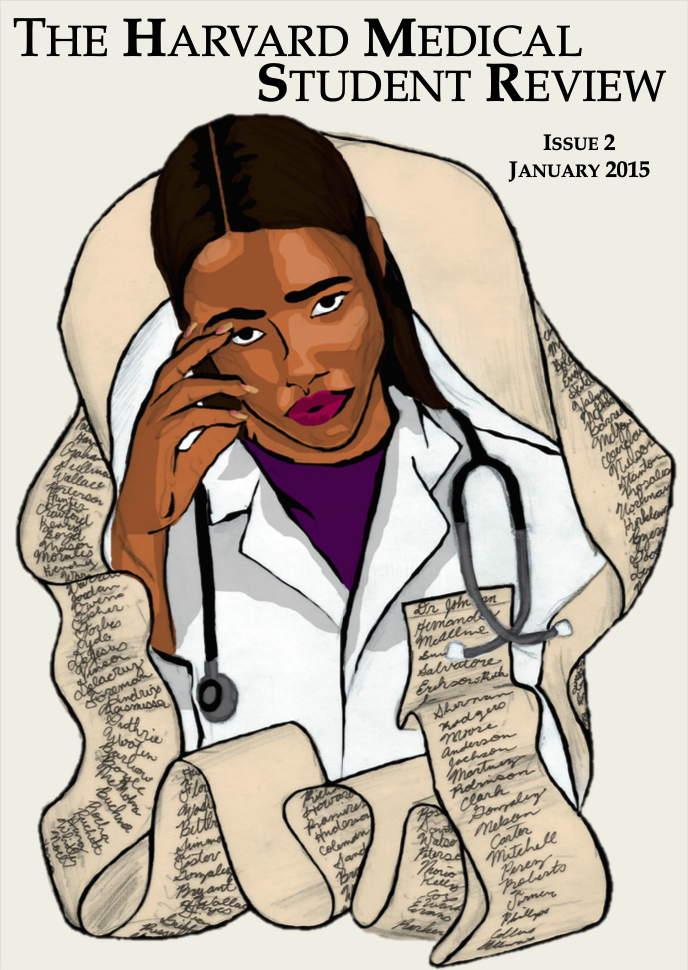
Harvard Medical Student Review: Issue 2 – January 2015
Vol. 2 No. 1 (2015)Issue 2 of the Harvard Medical Student Review brings together empirical research, clinical scholarship, health policy analysis, and ethical debate with a strong focus on how systems and culture shape care. Original research examines how female medical students at Harvard anticipate handling maiden names after marriage, illuminating identity, professionalism, and gender norms, while a case study–based review dissects an acute respiratory infection outbreak at HMS to explore what is truly known about the common cold and its transmission. A clinical review outlines evidence-based management of stasis dermatitis and chronic venous insufficiency when conservative therapies fail, and another article argues that clinicians must be trained to harness “big data,” highlighting the MIMIC ICU database and critical data marathons as a model. Health policy pieces analyze the ACA’s temporary Medicaid primary care pay boost and CHIP funding “expiration dates,” Vermont’s bid to move beyond the ACA with single-payer financing, and the role of mobile clinics in bridging stark geographic and socioeconomic gaps in access. Opinion essays challenge physician participation in lethal injection on ethical grounds and call for a more critical, evidence-focused approach to complementary and alternative medicine in undergraduate medical education, underscoring the responsibilities of physicians as both caregivers and advocates for rigor in medicine.
-

Harvard Medical Student Review: Issue 1 – March 2014
Vol. 1 No. 1 (2014)Issue 1 of the Harvard Medical Student Review (2014) inaugurates an online, student-driven forum for critical reflection on medicine, health systems, and society. Inspired by the long tradition of American medical journals and launched amid rapid scientific advances and persistent health inequities, this first issue invites students, trainees, and professionals to contribute research, commentary, and narrative pieces that “communicate the truth with clarity, precision, and humanity.”